Abstract: The implementation of creativity and technology is a game-changer for cross-border sellers of pet products overseas.
In recent years, the “pet economy” has emerged globally, and the export of pet products has become a new choice for domestic pet businesses and brands.
In the “Six Trends of Domestic Products Going Global in the Second Half of 2025” announced by AliExpress at the end of August last year, creative pet products from overseas were sought after by overseas consumers. Data shows that in Europe, the growth rate of pet “heatstroke relief artifacts” on AliExpress exceeded 200%, and smart pet products increased by 8 times year-on-year.
Turning our attention to the UK, the “pet economy” is also prevalent there. As the trend of creative pet raising led by Chinese businesses gains popularity worldwide, can domestic pet businesses and brands open up the pet products UK market?
I. The Prevailing “Pet Economy” in the UK and the New Trend of Creative Pet Products
According to data from the UK Office for National Statistics, the number of pet owners in the UK has been increasing since 2015. People spend more than 7.9 billion pounds (about 9.6 billion US dollars) on their pets every year, an increase of more than 150% compared with the early 2000s.
Due to the increasing demand, the UK “pet economy” has gradually refined in its development. In addition to the traditional pet food market, it has also derived segmented industries such as pet grooming and pet insurance. Pet products specially developed, produced and used for pets, such as traction devices, pet beds and mats, pet toys, and eating utensils, are also segmented markets of the pet economy, showing a growth trend in recent years.
According to IBISWorld data, the UK online pet food and pet products retail market is expected to grow by 2.9% year-on-year in 2026; the annualized market size of UK online pet food and pet products retail will grow by 7.5% from 2018 to 2026.
Due to the long history of pet raising, developed economy and high consumption power, the UK has become one of the largest pet products markets in Europe, and the traditional pet products industry has actually reached maturity with the development of the pet products market.
Generally speaking, it is difficult for new entrants to enter a mature industry. However, in recent years, the trend of product innovation emerging in the pet products industry, which combines creativity and cutting-edge technology with products, has found previously neglected markets and brought new growth to the pet products industry.
According to the latest data from consulting firm SkyQuest, the global pet technology market was worth 5.2 billion US dollars in 2021 and is expected to reach 17.57 billion US dollars by 2028, with a compound annual growth rate of 19%. European consumers also have a very high acceptance of smart pet products, with more than 67% of European consumers purchasing smart devices for their pets.
Among them, European and American practitioners are strong in products such as tracking collars with chips. Apple once launched a tracking locator AirTag, which is widely used on pet collars.
In the development process of the global pet products industry, Chinese pet products manufacturers were mostly at the bottom of the smile curve of the supply chain, engaged in low-value-added work such as OEM and production and manufacturing. Today, with the increasing call for brand going global, domestic pet products industry practitioners are taking the wind of smart pet products to accelerate brand going global.
For example, searching for related products on Amazon UK with the keyword “Pet Supplies“, the two automatic feeders in the first row of the search results belong to brands HoneyGuaridan and Hipidog, both from China.
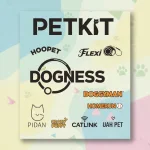
According to incomplete statistics from the media, in the past three years, most of the products launched overseas in the category of pet smart feeders are domestic brands, including CATLINK, Xiaomi, Niaoyu Huaxiang, Mengkong, etc., accounting for most of the market share of overseas smart pet products.
In addition, pet products such as dog chews, pet toys, pet clothes, dog leashes, and traction ropes are also exported to many countries such as the UK, the US, and Australia with good design and new creativity. For example, last year, many countries including the UK experienced extreme heat, and pet heatstroke relief products such as dog pools sold well.
Although the traditional UK pet products market has entered maturity, overseas sellers are meeting new market demands and winning the favor of consumers with intelligence and creativity.
II. Assessment of Internal and External Risks and Opportunities: Risks Exist, but Opportunities Are More
Overseas cross-border sellers have found incremental markets in the UK pet products market with creative pet raising. However, exporting pet products is not simple. Where are the specific opportunities and risks for cross-border sellers? We may analyze them from two aspects:
In terms of the external macro market environment, we can analyze it through the PEST model.
From the perspective of Political factors, there are currently no mandatory regulations specifically for pet products in the UK pet products market, excluding food, medicine and other related products. But this does not mean that pet products are not regulated; they may be subject to general consumer product regulations. For example, smart feeders must comply with relevant UK household appliance laws and regulations, and pet care products need to comply with CLP chemical classification and labeling.
From the perspective of Economic factors, the UK itself is a developed country with high consumption capacity, which is suitable for cross-border sellers of pet products to enter. At the same time, under the influence of inflation in recent years, the weight of the UK consumer price index for pet products is rising.
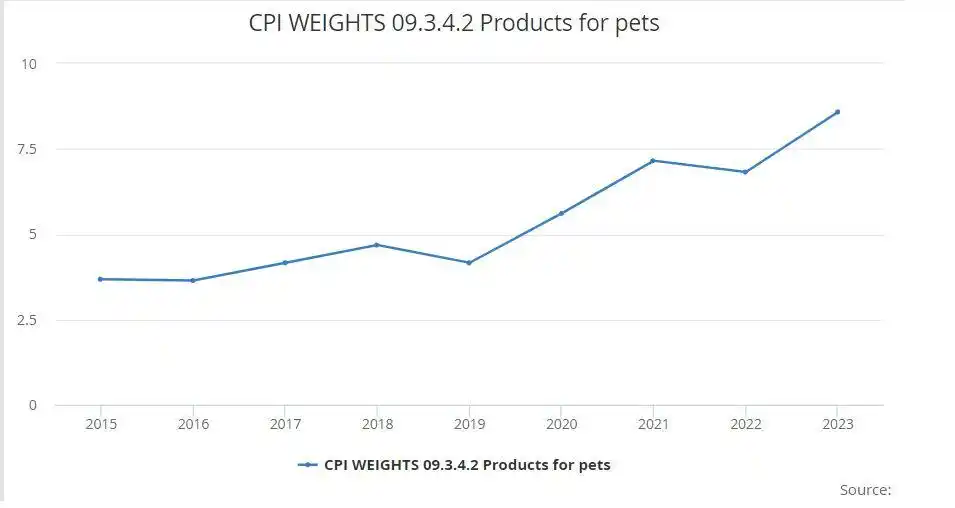
This is an opportunity for cross-border sellers. On the one hand, the increasing inflation of pet products in the UK allows overseas cross-border sellers to gain price advantages by virtue of their supply chain advantages; on the other hand, against the background of inflation, overseas sellers can appropriately raise prices and take a step forward on the road of high-quality brand going global.
From the perspective of Social factors, the epidemic in recent years has changed the travel mode of British people. Long-term home life has spawned various new demands, including a high demand for pet companions. According to data from the BBC, more than 3.2 million people bought new pets during the pandemic, and 74% of owners said their pets helped them improve their mental health.
The love for pets makes British people willing to spend money to make their pets live better. According to Groom Arts data, British people spend more than 10 billion pounds on dogs and 8 billion pounds on cats every year. According to Geo Marts data, one-fifth of people in the UK spend at least 20 pounds a month on clothes for their pets, and about 60% of dogs need some form of grooming every 4–6 weeks.
From the perspective of Technological factors, smart pet devices are a major trend in the UK and even the global pet products market. In terms of technology, there is no lack of cutting-edge technology abroad. The optimization of ChatGPT by GPT-4 is even more amazing, and it is believed that more cutting-edge artificial intelligence technology products will appear in the future.
However, in terms of the commercialization of cutting-edge technology, foreign technology companies are not as good as domestic ones. Megvii once announced a patent for “dog face recognition”. Domestic pet products enterprises may be more proficient in combining artificial intelligence with the “pet economy”.
In terms of the internal cross-border pet products industry, we can analyze it through the SWOT model.
Strengths: Some of them have been mentioned earlier. Specifically, the domestic cross-border pet products industry has two advantages. First, the supply chain is improved. Like the clothing supply chain in Panyu, Guangdong, there are similar pet products industrial clusters in China, such as Shuitou Town, Pingyang County, Wenzhou, which enables the domestic supply chain to quickly iterate products according to user needs. Second, it is good at finding application scenarios for intelligent technology. For example, Xiaomi connects pet smart devices with home Internet of Things.
Weaknesses: The brand awareness and brand premium of Chinese pet products are not very high. Due to long-term being in the OEM and production and manufacturing end with low profits in the industrial chain, it takes time to cultivate their own brands.
Opportunities: China’s policy support for foreign trade enterprises is very strong. Relevant departments such as the Ministry of Commerce, General Administration of Customs, and Ministry of Finance have successively introduced policies to support the stable development of foreign trade. Local governments in various regions are also actively promoting cross-border e-commerce comprehensive pilot zones to empower industrial clusters with cross-border e-commerce.
It is worth noting that some foreign trade village and town industrial clusters of pet products are receiving national policy support. For example, the pet products industrial cluster in Shuitou Town, Pingyang County, Wenzhou has obtained a special provincial reward for industrial clusters.
Threats: Under the great changes unseen in a century, the world economy is turbulent, geopolitical risks exist, and local protectionism is serious, which will also have a certain impact on pet products export enterprises. For example, after Brexit, logistics and tariff policies have changed to a certain extent.
In general, the UK pet products market has sufficient space. Domestic cross-border sellers of pet products have gained a certain market share in pet products UK market with creative pet raising. However, through the analysis of internal and external risks and opportunities, it is found that there are great opportunities, but attention should also be paid to risks in terms of policies and geopolitics.
Frequently Asked Questions (FAQs)
Q1: What is the current size and growth trend of the pet products uk market?
A1: The UK is one of the largest pet products markets in Europe. British people spend more than 7.9 billion pounds (about 9.6 billion US dollars) on their pets every year, an increase of more than 150% compared with the early 2000s. According to IBISWorld data, the UK online pet food and pet products retail market is expected to grow by 2.9% year-on-year in 2026, and the annualized market size will grow by 7.5% from 2018 to 2026.
Q2: What are the new trends driving the growth of the pet products uk market?
A2: The main trend driving the growth of the pet products uk market is the combination of creativity and cutting-edge technology. Smart pet products are highly accepted by European consumers (more than 67% of European consumers purchase smart devices for their pets), and creative pet products such as pet heatstroke relief artifacts are also popular. In addition, the refined development of the UK “pet economy” has also promoted the growth of segmented pet product markets such as traction devices, pet beds and mats, and pet toys.
Q3: What advantages do Chinese cross-border sellers have in the pet products uk market?
A3: Chinese cross-border sellers have two main advantages in the pet products uk market. First, they have an improved supply chain, with pet products industrial clusters (such as Shuitou Town, Pingyang County, Wenzhou) that can quickly iterate products according to user needs. Second, they are proficient in finding application scenarios for intelligent technology, such as Xiaomi connecting pet smart devices with home Internet of Things. In addition, Chinese brands have occupied most of the market share of overseas smart pet products, such as automatic feeders.
Q4: Are there any policy regulations that Chinese sellers need to comply with when entering the pet products uk market?
A4: Currently, there are no mandatory regulations specifically for pet products in the pet products uk market (excluding food, medicine and other related products), but pet products are subject to general consumer product regulations. For example, smart feeders must comply with relevant UK household appliance laws and regulations, and pet care products need to comply with CLP chemical classification and labeling.
Q5: What risks may Chinese cross-border sellers face when entering the pet products uk market?
A5: The main risks include turbulent world economy, geopolitical risks and serious local protectionism. In particular, after Brexit, the logistics and tariff policies of the UK have changed to a certain extent, which will have an impact on pet products export enterprises. In addition, Chinese pet products have low brand awareness and brand premium, which also brings certain challenges for sellers to cultivate their own brands in the UK market.
References
PangoVet – A professional pet statistics and research platform, providing detailed data on UK pet ownership, including the proportion of households with pets, the number of pet cats, and adoption trends, which supports the analysis of the prevalence of the UK “pet economy”.
IBISWorld – A global leading industry research company, offering a detailed market research report on UK online pet food and pet supply retailing (2015-2030), including revenue forecasts, growth trends, and industry drivers, which provides core data for the growth trend analysis of the UK pet products market.
SkyQuest – An international consulting firm, releasing a regional analysis report on the global pet tech market, covering Europe’s pet tech development trends, market size, and growth prospects, which supports the analysis of smart pet product trends in the UK market.
Actual Market Research – A global market research institution, providing a detailed report on the UK pet healthcare market, including stringent regulatory policies for UK pet products such as CLP chemical classification and labeling requirements, which clarifies the regulatory norms that cross-border sellers need to comply with.