According to the financial report for the first half of the 2025 fiscal year released by international food giant Nestle. The total revenue of the company is 45 billion Swiss francs. Among them, the revenue of the largest business “powder and liquid beverage” in the first half of the year was 12.041 billion Swiss francs, a year-on-year increase of 2.8%; The pet business revenue was 9.452 billion Swiss francs, a year-on-year increase of 3.8%, achieving median single digit growth, making it Nestle’s “second largest business”.
The pet food industry has always had a high market concentration. According to 25 years of data, the top ten global companies account for 39.2% of the total global market revenue, and the US market accounts for 40.7% of the total global market. The headquarters of the top five food companies in the world are all in the US, which clearly demonstrates the dominant position of the US in this industry.
The top ten have undergone changes
For the pet market, 25 years of competition and change are still an unavoidable topic. As the foundation of the “pet economy”, the pet food industry, according to the financial reports of various companies and the research results of foreign data company WATT Global Media, Nestle Purina has reached the top of the pet food industry in 2025 with its in-depth research and continuous innovation strategy in the field of pet nutrition and health, while Mars Pets has retreated to the second place. As the only two twin stars in the industry to break through billions of dollars, the competition between Nestle and Mars is undoubtedly driving the development of the entire industry. From the financial reports disclosed by major pet food companies worldwide for the 25th year, the overall list of top pet food companies has not changed much, but there have been some subtle changes in the annual revenue ranking.
According to research conducted by WATT Global Media, the sales revenue of Mars’ pet care sector was approximately $20 billion last year. By comparing this data, Nestle and Mars have swapped positions in the $10 billion market; In the $1-2 billion race track, Hills firmly holds third place; General Mills ranked fifth with $2.3 billion in sales two years ago, and climbed to fourth place with $2.5 billion in sales in 2025; Diamond pet food maintains $1.5 billion, but climbs from sixth to fifth place; J. M. Smucker’s revenue in 2015 was only $1.5 billion, a decrease of $1.2 billion from $2.7 billion in 2024, dropping from fourth to seventh place. The main reason for this is likely the divestment of pet food brands such as Nutrish and 9Lives, whose net sales are expected to reach $1.5 billion. Pinpu still ranks 9th, while Yunya is the only company from the Yada region to make the list. Alphia, on the other hand, is embroiled in legal disputes with its partners due to investment and financing issues.
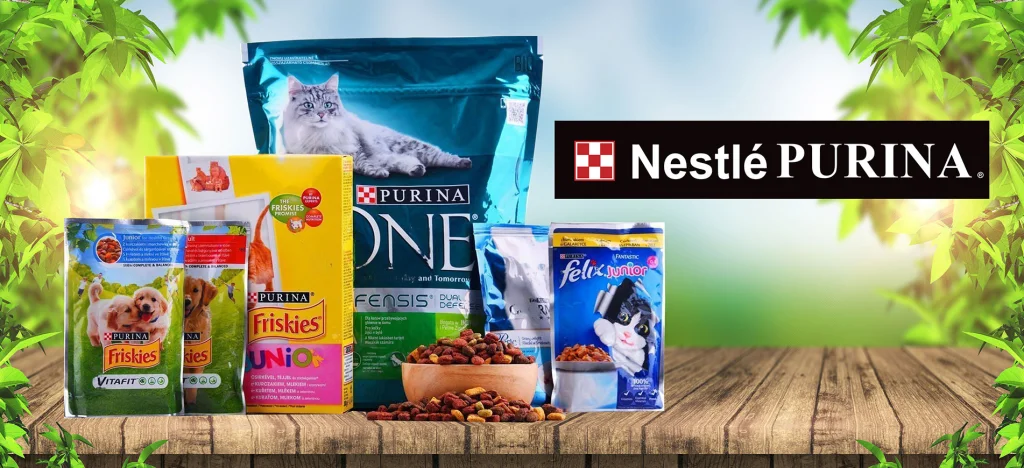
It is reported that Nestle’s pet care business has achieved dual growth in both business and profit this year, with Purina’s pet care business being the biggest contributor to organic growth, mainly due to the release of new products by the high-end brand Purina Guanneng based on scientific formulas and strong performance in e-commerce channels. It is worth noting that the profit growth of Nestle’s pet business is also inseparable from its optimization of product structure, proprietary brands, and procurement models.
- From the perspective of product profit, the gross profit margin of pet snacks is generally higher than that of staple foods, with the former usually reaching 40% -60%. However, staple foods are affected by the high proportion of raw material costs (grains, meat, etc. account for more than 60% of the total cost), with gross profit margins mostly ranging from 25% -40%. Nestle has effectively improved its overall profitability by enriching its snack product line and combining it with high-end staple food combinations.
- From the perspective of self owned brands, Purina, Guanneng and other self owned brands do not need to pay brand authorization fees, and can directly communicate with consumers to grasp demand feedback, reduce intermediate costs, and rely on brand reputation to achieve premiums, further increasing profits.
- From the perspective of procurement mode, Nestle has significantly reduced the cost of raw material procurement by leveraging its global scale bulk procurement advantage. Bulk procurement can lower the purchase price of core raw materials (such as meat and grains) by 10% -20%, while reducing additional costs such as logistics and warehousing through centralized procurement, effectively offsetting the profit pressure caused by fluctuations in raw material prices. This is also one of the core supports for the steady growth of its pet business profits.
As a subsidiary of Colgate, Hill’s Pet Business Unit has also performed well this year, achieving revenue of 2.216 billion US dollars in the first half of 2025, a year-on-year increase of 4.68%. Among them, the second quarter revenue was 1.114 billion US dollars, a year-on-year increase of 5.49%. In terms of profitability, the pet business had a profit margin of 19.54% in the first half of the year, an increase from 17.67% in the same period last year. Especially in the second quarter, it achieved a profit of 235 million US dollars, a profit margin of 21.10%, a significant increase from 18.09% in the same period last year.
The improvement of these data is not only achieved by increasing advertising investment and pricing, but also by improving the combination of prescription and wet food products, enhancing science based products, creating a product matrix, and increasing multi-channel sales. The profit increase of Hill’s is also in line with the profit logic of pet food:
- Its prescription snacks, as high value-added products, have a gross profit margin far exceeding that of ordinary staple foods, becoming a highlight of profit growth.
- At the same time, Hill’s insists on operating its own brand, relying on the professional reputation of prescription grains to create brand barriers and achieve product premiums. Compared to OEM brands, the profit margin of its own brand can be increased by 15% -25%.
- In addition, Hill’s relies on Colgate’s global procurement system to achieve bulk procurement of core raw materials, effectively control costs, optimize product structure, and promote continuous improvement in profit margins.
Compared to Nestle and Hill’s, General Mills’ dry and wet pet food has experienced a single digit decline in the past July. From May 2025 to February 2026, the net sales of General Mills’ pet division decreased by 4% year-on-year, reaching $2.37 billion (approximately RMB 17.2 billion). And the department’s net sales last year were 2.47 billion US dollars (approximately 17.9 billion RMB).
Although General Mills’ dry and wet pet food data has declined. However, the operating profit of the department increased by 9% to $486 million, mainly due to HMM’s cost savings and favorable net price realization and combination, partially offsetting the impact of decreased sales, rising supply chain costs, and other expenses. From the perspective of profit logic:
- General Mills’ profit growth is partly due to its adjustment of product structure, increasing the proportion of high gross profit pet snacks, and compensating for the profit loss caused by the decline in main grain sales (snack gross profit margin is 10% -20% higher than main grain).
- On the other hand, its own pet brand relies on the channel advantages of its parent company to reduce intermediate links, improve profit margins, and further compress costs through bulk procurement of core materials. The cost advantage brought by bulk procurement has become the key to achieving profit growth in the context of declining sales. Even if sales decline, large-scale procurement can still reduce unit costs, coupled with price adjustments, effectively ensuring profit levels.
The Importance of the Domestic Market
Compared to the stability of overseas markets in Europe and America, China, Southeast Asia, and Russia still show strong vitality. The compound annual growth rate of the Chinese pet food market from 2013 to 2025 is 22.4%, far exceeding the global average of 4.9%. The annual growth rate of online channel sales during the same period can even reach 49.05%. This is also why Mars and Nestle are still thriving in China.
Compared to the United States and Japan, the domestic pet industry is still in a period of rapid development, and there is still room for improvement in pet penetration rate and single pet expenditure. For brand owners, the average annual single pet expenditure in China is 2322 yuan, far lower than the 8664 and 6484 yuan in the United States and Japan. Even considering factors such as currency purchasing power, the spatial price difference in the middle, matched with the huge pet base, is still their coveted target.
Due to the cyclical nature of the pet industry, by fitting the year-on-year growth rate of the US pet industry market size, the year-on-year growth rate of human GDP, and the year-on-year growth rate of GDP, we found that the year-on-year growth rate of the pet industry market size has always been higher than the year-on-year growth rate of GDP and per capita GDP, and combined with the 2020-2022 (during the pandemic and economic downturn period), the brand and company CR10 in the US pet market have tended to stabilize. The concentration of brands and companies remains stable at around 40% and 77%, respectively. Compared to the domestic market with a similar development history, it is difficult not to let these top players with capital backing and rich combat experience enter the immature domestic market.
For domestic and foreign brands expanding into the domestic market, the core logic of pursuing high gross profit also revolves around the profit difference between snacks and staple foods, the creation of their own brands, and bulk procurement.
- The growth rate of the domestic pet snack market far exceeds that of staple foods, and the gross profit margin is higher, becoming the core breakthrough for brands to seize the high gross profit market.
- Private brands are more likely to meet the pet raising needs of domestic consumers without paying authorization fees, and have a wider profit margin. Compared to representing overseas brands, the net profit of private brands can increase by 10% -20%.
- Batch procurement is the key to controlling costs and ensuring profits. Domestic top brands (such as Guibao and Zhongchong) effectively reduce costs by purchasing raw materials in bulk, while relying on e-commerce channels to reduce intermediate links, further amplifying profit advantages, and forming differentiated competition with overseas brands.
The era of big fish eating small fish has arrived
Due to the characteristics of multiple segmented fields in the pet food category, and the unique individual differences of each pet, it is difficult for a single product and brand to occupy the minds of consumers. Top companies are more inclined to acquire and improve their market share, which has led to a global market pattern of “market share concentration towards top companies, but relatively dispersed brands”.
Looking back at the rise of Mars and Nestle, they completed the layout of the pet consumption ecosystem through mergers and acquisitions and self creation, focusing on the product layout of high, medium, and low levels, creating gimmicks specifically for pets to emphasize their professionalism, continuously optimizing and upgrading to reflect their scientificity, and finally gradually developing their own products, emphasizing economic value. The core of this layout is essentially centered around profit enhancement:
- Acquiring high gross profit snack brands, quickly supplementing snack product lines, and raising overall profit levels.
- Creating our own brand, getting rid of OEM dependence, enhancing premium ability and profit margin.
- At the same time, by integrating supply chain resources through mergers and acquisitions, expanding procurement scale, achieving cost advantages in bulk procurement, further reducing operating costs, increasing profits, and forming a virtuous cycle of “mergers and acquisitions expansion – bulk procurement – profit enhancement”.
However, it is worth noting that many leading domestic pet food brands have already recognized this trend. Guaibao Pet is improving its product matrix with multiple brands, while Jianhe is creating a high-end food and nutrition product series to leverage new growth points. Zhongchong and Petty are also building their own brands to expand their markets in Southeast Asia, Russia, and other places. They have both the ability to move inward and the courage to look for a way out. The inevitable trend of industry development is that facing competition from overseas, everyone is either busy with their work. Either busy dying.
For domestic brands, on one hand, there is a “wolf”, and on the other hand, they need to consider how to use e-commerce channels that “foreigners” cannot understand to transition from “winning by quantity” to “winning by quality”. The key to achieving this transition is to grasp the core logic of high gross profit in pet food:
- Firstly, optimize product structure, increase research and development and investment in high gross profit pet snacks, and narrow the profit gap with overseas brands in the snack field.
- The second is to deeply cultivate our own brand, create differentiated brand labels, increase product premiums, and get rid of the profit dilemma of “low-priced OEM” – compared to OEM, our own brand can not only avoid brand authorization costs, but also directly connect with consumers, reduce intermediate links, and increase profit margins by 15% -30%.
- The third is to expand the procurement scale, achieve bulk procurement, reduce raw material costs. Bulk procurement can reduce core raw material costs by 10% -20%, effectively hedge the risk of raw material price fluctuations, improve sales while ensuring profit levels, and ultimately achieve a transformation from “volume increase” to “profit increase”, occupying a place in competition with overseas giants.
FAQ
Q: What was Nestle’s pet business revenue in the first half of FY2025, and what was its year-on-year growth rate?
A: Nestle’s pet business revenue in the first half of FY2025 was 9.452 billion Swiss francs, with a year-on-year increase of 3.8%.
Q: Which company ranked first in the global pet food industry in 2025, and which one ranked second?
A: In 2025, Nestle Purina ranked first in the global pet food industry, while Mars Pets retreated to the second place.
Q: What is the compound annual growth rate of China’s pet food market from 2013 to 2025, and how does it compare with the global average?
A: The compound annual growth rate of China’s pet food market from 2013 to 2025 is 22.4%, which is far higher than the global average of 4.9%.
Q: What are the main reasons for the profit growth of Nestle’s pet care business in 2025?
A: The main reasons include the new products released by the high-end brand Purina Guanneng based on scientific formulas and its strong performance in e-commerce channels, as well as the optimization of product structure, proprietary brands and procurement models.
Q: What is the gross profit margin range of pet snacks and pet staple foods respectively?
A: The gross profit margin of pet snacks is generally 40% – 60%, while that of pet staple foods is mostly 25% – 40%.
Q: What was Hill’s Pet Business Unit’s revenue in the first half of 2025, and what was its year-on-year growth rate?
A: Hill’s Pet Business Unit achieved revenue of 2.216 billion US dollars in the first half of 2025, a year-on-year increase of 4.68%.
Q: What is the main reason for J. M. Smucker’s decline in pet food revenue in 2025?
A: The main reason is likely the divestment of pet food brands such as Nutrish and 9Lives.
Q: What is the market pattern of the global pet food industry at present?
A: It presents a pattern of “market share concentration towards top companies, but relatively dispersed brands”.
Reference
WATT Global Media – As a professional media focusing on the global pet food industry, it provides authoritative industry data, top company rankings and market research reports, offering key support for the 2025 global pet food company ranking changes mentioned in the original text.
Nestlé Half-Year Report 2025 – This is Nestle’s official 2025 H1 financial report, which details the revenue, growth rate and profit drivers of each business segment, including the pet business, and is the authoritative source of Nestle-related financial data in the original text.
Pet Food Industry – Operated by WATT Global Media, this website provides in-depth coverage of global pet food market trends, enterprise dynamics and product research, and its data and analysis are consistent with the industry status described in the original text.
Fortune Business Insights – It releases professional research reports on the global pet food market, including market size, growth rate, major players and industry patterns, which verifies the market concentration and regional growth characteristics mentioned in the original text.