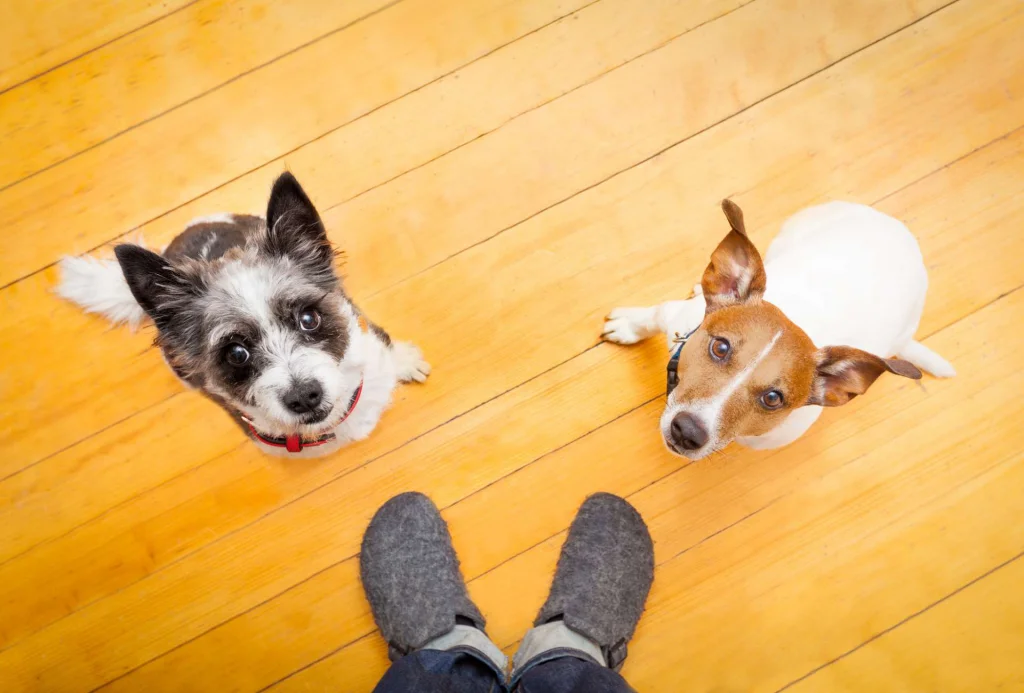
Dog owners who work office jobs, have you ever thought:I’m at work all day, my dog must be so bored and lonely at home. I want to get another dog to keep it company.
Today let’s break down this question.The answer is: not recommended.
Why “Dogs Are Pack Animals” Doesn’t Apply Here
Many people say dogs descended from wolves, so they are pack animals. That’s true, dogs are indeed pack animals. But pet dogs raised by humans are provided with food and shelter, and don’t have to face the cruel hunting environment like wolves in ancient times. The effect is completely different. In other words, dogs only recognize their owner, only miss their owner. Being in a pack at home has little to do with another dog.
What Your Dog Actually Does While You’re at Work
When a dog is home alone, apart from the moment right after you leave, it will play by itself for a while, or maybe destroy things for a bit. Most of the time, it will just sleep. Because sleeping helps ease the longing, which is indeed loneliness. That’s why you’ll find that when you get home, your clothes or pants are dragged onto the floor by your dog, and the dog will most likely sleep on them. Studies show that dogs fall asleep smelling their owner’s scent, as if meeting them in dreams. Whether that’s really the case, we can’t know for sure.
How Two Dogs Really Interact When Home Alone
When you get a second dog to keep the first one company, you’ll find that they barely interact except when sleeping. But dogs have a strong sense of time; they know when you’re about to come home and wait by the door.
They only interact a little when the owner is home, and even that interaction is shorter than the time they spend playing with their own toys.
The Real Problem: Resource Competition & Jealousy
Moreover, if both are male dogs, they will develop jealousy, and in serious cases, they will fight. Especially jealous breeds like Teddy (Poodle) or highly intelligent Border Collies. Only tolerant breeds like Golden Retrievers will let smaller dogs be. But no matter the breed, dogs raised at home will not feel companionship toward another dog. Because resource competition (food) is the core conflict in multi-dog households. In the eyes of the first dog, the second dog is a competitor for food, water, the owner’s attention, territory, toys, and all kinds of survival and emotional resources — in short, a rival. The only tiny benefit is that the competitive mindset might fix the dog’s picky eating, but that’s it.
Common Signs of Resource Conflict in Multi‑Dog Households
Signs of conflict from resource competition in multi-dog households are easy to spot: growling or baring teeth at each other during meals, even shielding the food bowl with their body; chasing the other dog away when drinking water; when the owner pets one, the other pushes in, paws the owner, or even tries to bite; guarding toys, beds, and other items and showing aggression if touched; frequent chasing, biting, and staring standoffs in daily life. These are all typical resource-competitive behaviors.
If You Insist on Having Multiple Dogs: Resource Management Rules
If you insist on raising multiple dogs, you need a good resource management strategy to ease conflicts:
First, allocate all resources separately. Prepare separate food and water bowls, place them far apart to avoid direct conflicts during meals, and feed them at the same time so they don’t feel “treated differently”.
Second, be fair with your attention. Give each dog equal time when petting and playing; don’t interact with only one for too long, to avoid jealousy.
Third, prepare exclusive toys and beds for each dog, placed in their own areas to reduce fights over items.
Fourth, set separate territories so each dog has its own safe space without disturbance.
Lastly, stop minor competitive behavior immediately and guide them to get along. If serious fighting or aggression happens, separate them right away and seek help from a professional dog trainer if needed.
Conclusion: It’s Just a Human Idea
So getting a second dog to keep the first one company is just a human’s subjective idea.
Because the owner is the most important being in a pet dog’s heart. This status is not like the alpha wolf over other wolves, nor like parents to children — it’s more like a combination of both.
Having two dogs doubles the cost, doubles the time you have to spend, and also takes a lot of energy to manage resources and resolve conflicts. Of course, wealthy people can do whatever they want, but rich people probably don’t work 9-to-5 anyway.
Q&A Section
Why is it not recommended for office workers to get a second dog to keep their first dog company?
First, pet dogs raised by humans only recognize and miss their owners, and the “pack animal” attribute is not the same as that of ancient wolves, so another dog can hardly bring companionship. Second, two dogs barely interact when home alone and only have a little interaction when the owner is at home, which is even shorter than the time they spend playing with their own toys. Third, multi-dog households will face serious resource competition (for food, water, owner’s attention, etc.), which may lead to jealousy, fights and other conflicts. In addition, raising two dogs will double the cost and time, and require a lot of energy to manage resources and resolve conflicts.
What do dogs usually do when they are home alone?
Apart from the moment right after the owner leaves, dogs will play by themselves for a while or destroy things a bit. Most of the time, they will sleep, because sleeping helps ease the longing for their owners. Sometimes, dogs will drag the owner’s clothes or pants to the floor and sleep on them, as studies show that dogs fall asleep smelling their owner’s scent.
What are the typical signs of resource competition in multi-dog households?
The signs include growling or baring teeth at each other during meals (even shielding the food bowl with their body), chasing the other dog away when drinking water, pushing in, pawing the owner or even trying to bite when the owner pets one dog, guarding toys, beds and other items and showing aggression if touched, and frequent chasing, biting and staring standoffs in daily life.
What resource management strategies should be adopted if one insists on raising multiple dogs?
There are five main strategies: first, allocate all resources separately (prepare separate food and water bowls, place them far apart and feed at the same time); second, be fair with attention (give each dog equal time for petting and playing); third, prepare exclusive toys and beds for each dog and place them in their own areas; fourth, set separate territories to ensure each dog has a safe space; fifth, stop minor competitive behaviors immediately and separate them right away if serious fighting or aggression happens, and seek help from a professional dog trainer if needed.
Do pet dogs have the same “pack animal” characteristics as ancient wolves?
No. Although dogs are descended from wolves and are pack animals, pet dogs raised by humans are provided with food and shelter and do not have to face the cruel hunting environment like ancient wolves, so the effect of the “pack animal” attribute is completely different. Pet dogs only recognize and miss their owners, and being in a pack at home has little to do with another dog.
References
Wikipedia: This article introduces the basic behavior of dogs, including their pack animal attributes, the impact of human feeding on their behavior, and the interaction rules between dogs. It points out that the social behavior of pet dogs is very different from that of wild wolves, and they are more dependent on their owners rather than other dogs.
DogsPlanet: This page focuses on exploring whether dogs are pack animals, comparing the differences between domestic dogs and wild wolves in terms of pack behavior. It points out that although dogs have wolf ancestry, they rely on humans for survival rather than other dogs, and their pack instinct is mainly reflected in their dependence on their owners rather than the need to coexist with other dogs.
Kinship: This article discusses the challenges of raising multiple dogs, focusing on resource guarding and conflict signs in multi-dog households. It provides practical resource management strategies (such as separate feeding areas, individual attention) and emphasizes the need for extra time and patience to maintain harmony among dogs.
ASPCA: This page explains the symptoms and causes of dog separation anxiety, including destructive behavior and excessive vocalization when left alone. It mentions that dogs rely on their owner’s scent to relieve anxiety, supporting the view that dogs miss their owners more than they need companionship from other dogs when alone.