
01 Prevention of Skin Diseases (Suitable for Two Week Resting Method)
For dogs that are prone to skin diseases, owners should guide them to develop the habit of sleeping in cages, combined with the “two-week rest method” to regulate the pace of cage keeping, which can effectively prevent the occurrence of skin diseases (avoiding dogs from touching unclean environments and rubbing against foreign objects indiscriminately, causing skin irritation).
If a dog has developed symptoms of skin disease, it is necessary to strictly follow a two-week rest and cage plan, reduce skin friction and avoid scratching the affected area through regular rest, and cooperate with medication treatment to promote its recovery more easily.
Two week rest schedule+daily behavioral suggestions
| Rest Period | Daily Core Tasks | Behavior Guidance Suggestions |
|---|---|---|
| Day 1-3 (Adaptation Period) | Adapt to the resting environment in the crate and reduce external stimulation | 1. Lay a soft and clean towel/puppy pad in the crate, and place 1 piece of the owner’s old clothes (familiar smell); 2. Control the daily crate time to 18-20 hours, let it out for activities twice a day, 15-20 minutes each time (only in a quiet indoor area, avoid running and jumping); 3. Observe the skin condition when letting it out, and prevent the dog from scratching. |
| Day 4-7 (Standardization Period) | Fix the crate training rhythm and cooperate with skin care | 1. Keep the crate dry and clean, replace the puppy pad and wipe the crate body every day; 2. Let it out for activities 3 times a day, 20 minutes each time, avoid contact with carpets, lawns and other areas that are easy to hide dirt during activities; 3. Guide the dog to return to the crate to rest after eating, and strengthen the cognition that “crate = safe and comfortable”; 4. Apply skin disease medicine on time, and keep it in the crate for a short time after application to avoid licking. |
| Day 8-14 (Consolidation Period) | Maintain the rest rhythm, gradually resume activities, and observe the recovery situation | 1. Control the daily crate time to 16-18 hours, let it out for activities 3-4 times a day, 25-30 minutes each time; 2. The activity range can be appropriately expanded (still limited to indoor), avoid contact with unclean items; 3. Check the skin condition every day, if the symptoms are relieved, the crate time can be appropriately reduced, but it still needs to rest in the crate at night; 4. Keep the diet light throughout the process, avoid spicy and allergenic foods, and assist skin recovery. |
02 estrus period captive breeding (suitable for two-week rest method)
During the estrus period, dogs may become emotionally and behaviorally unstable, prone to restlessness, running around, and urinating. At this time, adopting the “two-week static confinement method” can not only calm the dog’s emotions but also effectively prevent accidents from occurring. Especially for female dogs, they need to be kept warm and protected from the cold during their physiological period. Keeping them in a static cage can provide them with a quiet and comfortable environment, ensuring their health.

Two week rest schedule+daily behavioral suggestions
| Rest Period | Daily Core Tasks | Behavior Guidance Suggestions |
|---|---|---|
| Day 1-3 (Early Estrus Period) | Adapt to resting in the crate and relieve restlessness | 1. Lay a warm and soft mat in the crate, and bitches need an additional warm layer (to avoid catching cold), and place a few of the dog’s favorite toys; 2. The daily crate time is about 20 hours, let it out for activities twice a day, 10-15 minutes each time (walk slowly on a leash, avoid contact with other dogs); 3. Accompany the dog more, and reduce its restlessness through soft comfort and gentle stroking. |
| Day 4-10 (Peak Estrus Period) | Strict rest, avoid going out for contact, and do a good job in cleaning | 1. The daily crate time is about 22 hours, only let it out for activities 1-2 times a day indoors, 10 minutes each time (avoid excited running and jumping); 2. Clean around the vulva of the bitch every day, replace the clean puppy pad, and wipe and disinfect the crate body every day; 3. Avoid strangers and other dogs approaching the crate to reduce external stimulation; 4. Feed regularly and quantitatively, avoid overfeeding, and reduce mood swings. |
| Day 11-14 (Late Estrus Period) | Gradually reduce the crate time and guide the recovery of normal state | 1. The daily crate time is about 18 hours, let it out for activities 3 times a day, 20 minutes each time (the activity volume can be appropriately increased, still on a leash); 2. Continue to do a good job in cleaning and observe the changes in the dog’s mood; 3. Gradually guide the dog to adapt to the normal schedule, and avoid running around due to sudden release from the crate. |
03 Cage care during illness (suitable for two-week rest method)
When a family dog unfortunately falls ill, in order to prevent cross infection of the disease, it is necessary to isolate it from other healthy dogs. The “two-week rest method” is the core care method – although cage keeping may limit the range of activities, it is a practical choice when there is no independent living space. At the same time, it is necessary to take into account the physical and mental state of the dog, arrange activity time reasonably, and help with recovery.

Two week rest schedule+daily behavioral suggestions
| Rest Period | Daily Core Tasks | Behavior Guidance Suggestions |
|---|---|---|
| Day 1-4 (Severe Illness Rest Period) | Reduce activities, focus on rest, and cooperate with treatment | 1. Lay a soft and comfortable mat in the crate, and place it in a quiet, ventilated and warm area (avoid direct sunlight and wind); 2. The daily crate time is 22-23 hours, only let it out once a day, 5-10 minutes each time (only move around the crate to avoid fatigue); 3. Administer medicine, food and water on time, and feed mainly digestible food in small and frequent meals; 4. Observe the mental state, body temperature and eating situation every day, and keep records. |
| Day 5-10 (Recovery Transition Period) | Maintain rest, moderate activities, and promote recovery | 1. The daily crate time is about 20 hours, let it out for activities 2-3 times a day, 15-20 minutes each time (walk slowly in a quiet indoor area, avoid strenuous exercise); 2. Keep the crate clean, replace the mat and wipe the crate body every day, and disinfect regularly; 3. Gradually increase the feeding amount, adjust the diet according to the condition, and ensure balanced nutrition; 4. Simple toys can be placed in the crate to relieve the dog’s loneliness, but avoid excessive excitement. |
| Day 11-14 (Recovery Consolidation Period) | Gradually reduce crate training, resume normal activities, and consolidate the recovery effect | 1. The daily crate time is 16-18 hours, let it out for activities 3-4 times a day, 25-30 minutes each time (the activity range can be appropriately expanded, still avoid going out to contact other dogs); 2. Continue to cooperate with follow-up treatment and observe whether the condition recurs; 3. Guide the dog to gradually adapt to the normal schedule. If the mental state is good and the eating is normal, the crate time can be gradually reduced until it returns to normal; 4. Avoid the dog from overwork and catching cold, and help the complete recovery of the condition. |
04 New Home Adaptation (Suitable for Two Week Resting Method)
The first step for newly arrived dogs to adapt to the environment is to provide a comfortable resting area. The “two-week static confinement method” is the most scientific way of adaptation – first place the dog in the cage (open the cage door), let it explore independently and establish a sense of security, and then combine regular confinement with activities to help the dog gradually integrate into the new home and avoid stress reactions caused by unfamiliar environment.
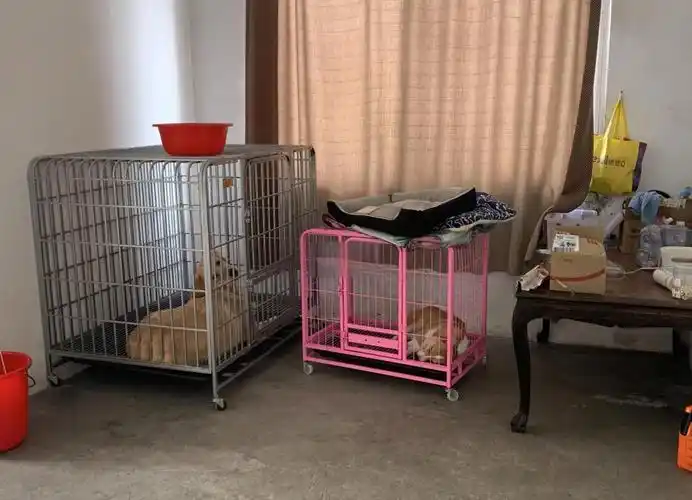
Two week rest schedule+daily behavioral suggestions
| Rest Period | Daily Core Tasks | Behavior Guidance Suggestions |
|---|---|---|
| Day 1-3 (Stranger Adaptation Period) | Familiarize with the environment in the crate and relieve stress from strangeness | 1. Arrange a comfortable rest area: lay a soft towel in the crate, place 1 piece of the owner’s old clothes (familiar smell), put a small amount of clean water and digestible puppy food (or the dog’s daily food), open the crate door, and let the dog enter and exit independently; 2. The daily opening time of the crate door is not less than 20 hours. Only when the dog takes the initiative to enter the crate to rest, the crate door can be closed briefly (1-2 hours), avoid forcing; 3. Reduce external interference, family members should speak softly as much as possible, avoid sudden noises and strong light stimulation, and do not tease the dog randomly. |
| Day 4-10 (Regular Adaptation Period) | Establish a crate training routine and gradually familiarize with the new home environment | 1. Fix the rhythm of crate training and activities: close the crate door 4-5 times a day, 1-2 hours each time (mostly after the dog rests and eats), and keep the crate door open at other times to let the dog explore a small area outside the crate independently (such as a separate room); 2. Guide the dog to get out of the crate for activities 3-4 times a day, 15-20 minutes each time, accompany the dog to familiarize with the room layout, gently stroke and comfort to establish trust; 3. Fix the time for feeding, watering and defecation, guide the dog to defecate in the designated area outside the crate, and reward it in time after defecation to strengthen good habits. |
| Day 11-14 (Integration Consolidation Period) | Expand the activity range and fully adapt to the new home | 1. Gradually expand the dog’s activity range from a separate room to the entire family, keep the crate door open, and let the dog choose the rest and activity area independently; 2. Reduce the number of times the crate door is closed to 2-3 times a day, about 1 hour each time (the crate door can be closed at night to let the dog develop the habit of sleeping in the crate); 3. Interact with the dog more, play with it and train simple commands (such as “sit”) to strengthen the trust relationship; 4. Observe the dog’s mood. If it is no longer timid, can take the initiative to get close to the family, and enter and exit the crate freely, it means that it has successfully adapted to the new home, and the two-week rest crate training plan can be ended. |
Conclusion: Is your dog used to resting in a cage?
In fact, the core of the “two-week rest method” is not “confinement”, but to provide a safe and comfortable resting area for dogs. Through regular time arrangements and scientific behavioral guidance, dogs can obtain sufficient rest and a sense of security in different scenarios (prevention of diseases, estrus, illness, new home). Slowly guide, most dogs can get used to resting in the cage, and the cage can also become their exclusive “safe nest”~
Frequently Asked Questions
Q: What is the main purpose of using the “two-week rest method” for dogs prone to skin diseases?
A: It can effectively prevent the occurrence of skin diseases by avoiding dogs from touching unclean environments and rubbing against foreign objects indiscriminately, which may cause skin irritation. If the dog already has skin disease symptoms, it can reduce skin friction, avoid scratching the affected area, and cooperate with medication to promote recovery.
Q: Why is the “two-week rest method” suitable for dogs during the estrus period?
A: During the estrus period, dogs may become emotionally and behaviorally unstable, prone to restlessness, running around, and urinating. The “two-week static confinement method” can calm the dog’s emotions and effectively prevent accidents. For female dogs, it can provide a quiet and comfortable environment to keep them warm and protected from the cold during their physiological period.
Q: What is the core reason for using the “two-week rest method” when a dog is ill?
A: The core reason is to prevent cross infection of the disease by isolating the sick dog from other healthy dogs. It is a practical choice when there is no independent living space, and it also helps to arrange activity time reasonably to take care of the dog’s physical and mental state and assist in recovery.
Q: How does the “two-week rest method” help newly arrived dogs adapt to a new home?
A: First, place the dog in a cage with the door open to let it explore independently and establish a sense of security. Then combine regular confinement with activities to help the dog gradually integrate into the new home and avoid stress reactions caused by the unfamiliar environment.
Q: Is the core of the “two-week rest method” to confine dogs?
A: No. The core of the “two-week rest method” is not “confinement”, but to provide a safe and comfortable resting area for dogs. Through regular time arrangements and scientific behavioral guidance, dogs can obtain sufficient rest and a sense of security in different scenarios.
References
Wikipedia – This article introduces the definition, function and application scenarios of dog crates (also known as dog cages or kennels). It points out that dog crates are designed to replicate dogs’ natural dens, which can provide a safe refuge for dogs in home, travel and other environments, and also be used for disease prevention, recovery care and other purposes, which is consistent with the core concept of the “two-week rest method”.
VCA Animal Hospitals – This article focuses on the care guidelines for dogs after surgery, emphasizing that confining dogs to a warm and safe cage or small area during the recovery period is necessary to limit excessive physical activity, avoid injury or complications, which provides authoritative support for the application of the “two-week rest method” in dog illness and recovery care.
Dr. Buzby’s ToeGrips – Written by an integrative veterinarian, this article explains the definition, significance and key points of dog crate rest, points out that crate rest is an important part of the healing process for sick or injured dogs, and answers common questions about crate rest, which provides professional reference for the scientific application of the “two-week rest method”.